A quiet debut that has become hard to ignore
A year ago this week, a 30-guest yacht slipped out of Broome, on Australia’s remote northwest coast, and into the tidal maze of the Kimberley, carrying the first paying passengers of a brand-new cruise line. That ship, m/y Paspaley Pearl, has since become the most talked-about name in Australian expedition travel, and one increasingly on the radar of North American travelers looking past the now well-worn routes to Antarctica and the Galápagos. The company behind her, Pearl Expeditions, is marking the anniversary with the kind of numbers most start-ups only promise: strong occupancy, a growing base of repeat guests, and a distribution network already outperforming expectations.
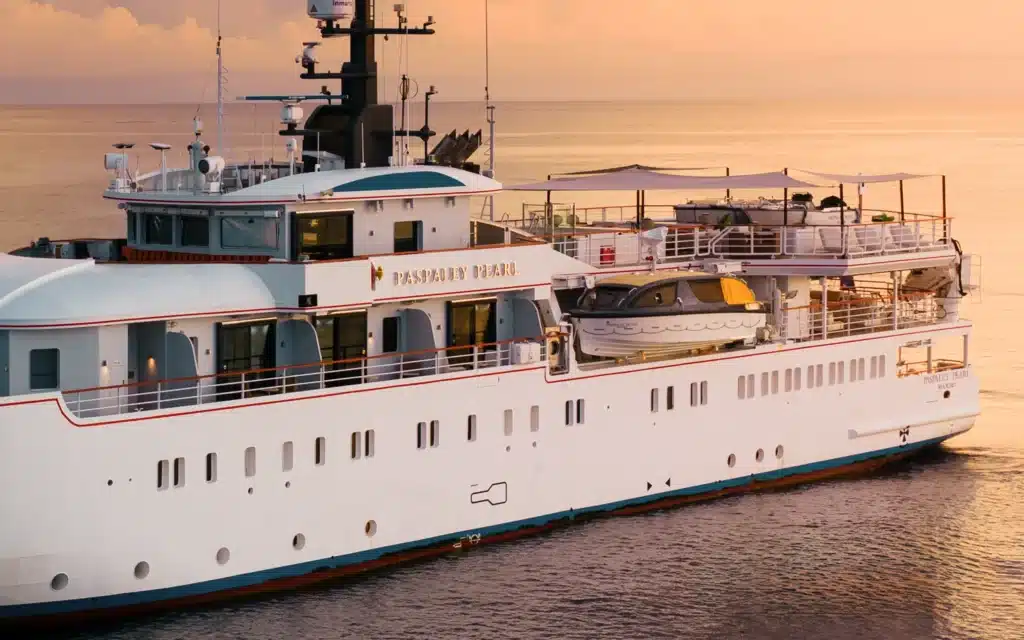
The timing is deliberate. On August 10, 2025, Paspaley Pearl welcomed her first guests in Broome to begin Kimberley operations; on August 10, 2026, a fresh set of travelers boarded for the new season, and many of last year’s inaugural passengers returned to celebrate alongside them.
From pearling dynasty to expedition operator
Pearl Expeditions is not a conventional cruise start-up. It is the newest venture from the Paspaley Group, the third-generation, family-owned Australian company better known for the South Sea pearls it has harvested from Kimberley waters for more than ninety years. That heritage shows up in ways a typical expedition line could not replicate: Paspaley Pearls displayed onboard, wine from the family’s own Bunnamagoo and Paspaley Family Reserve labels, flight-seeing on Pearl Aviation’s Grumman Mallard seaplanes out of Kuri Bay, the company’s pearling base and the only non-Indigenous leasehold in the Kimberley, and a closing night at the Paspaley-owned Pinctada Hotel in Broome.
Executive chairwoman Sarina Bratton, the expedition cruise veteran who built and sold Orion Expedition Cruises before founding Pearl Expeditions, credits the group’s broader infrastructure for a launch pace that would otherwise have taken years. She moved quickly to assemble a shoreside team drawn largely from her Orion days, then paired that experience with a distribution strategy built around thirty hand-picked agency partners rather than a broad trade rollout.
“A highly targeted distribution strategy identifying 30 distributors domestically and internationally has delivered strong results and provided the platform from which to grow and expand. We are proud that this disciplined approach has resulted in our leading domestic, single-outlet agency generating in excess of $4 million in our first year.” (Bratton’s figures are in Australian dollars, roughly US$2.8 million at current exchange rates.)
Sarina Bratton, Executive chairwoman of Pealr Expeditions.

Thirty guests, four naturalists, one very small footprint
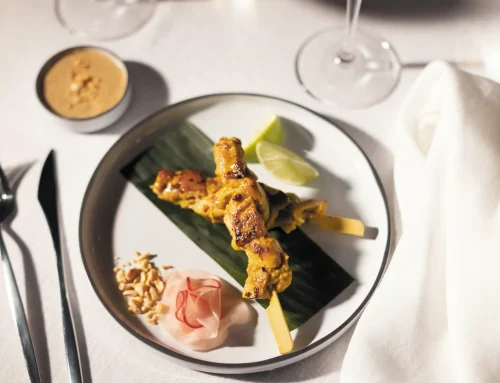
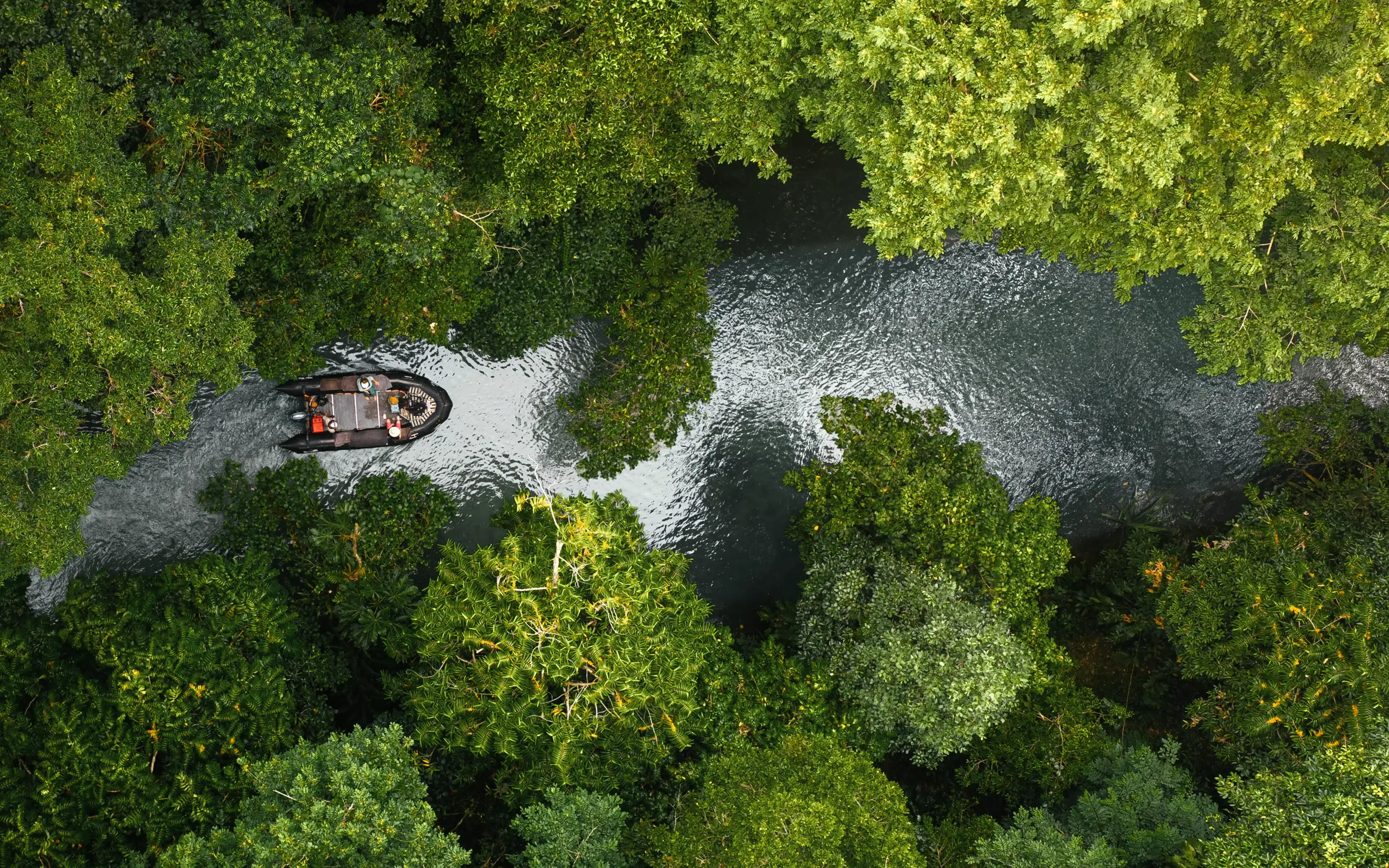
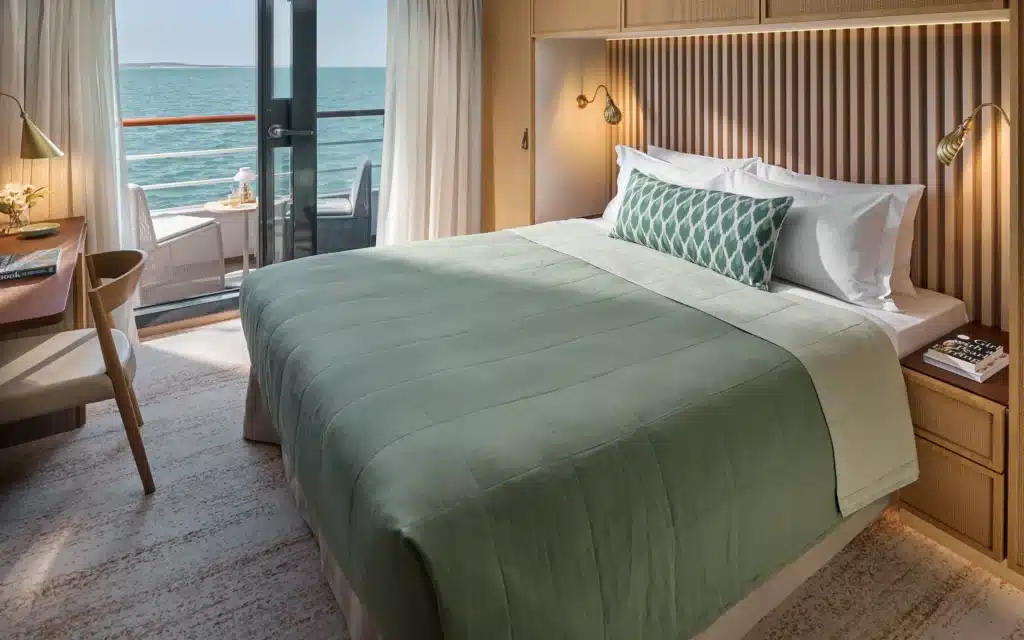
The product itself leans hard into intimacy. The scale is deliberate: Paspaley Pearl carries just 30 guests, supported by a crew of 22 that includes four naturalists, three Zodiacs and two fast tenders doubling as fishing boats. Onboard, a 32-seat restaurant run by expedition chef Alex Bentley serves modern Australian menus, while an eight-person jacuzzi and an upper-deck sanctuary give guests somewhere to decompress between shore landings. In the Kimberley itself, that scale matters: tides here can swing by as much as fourteen meters, reshaping the coastline twice a day and putting some of the region’s oldest rock art galleries within reach only of vessels small enough to thread the gaps.
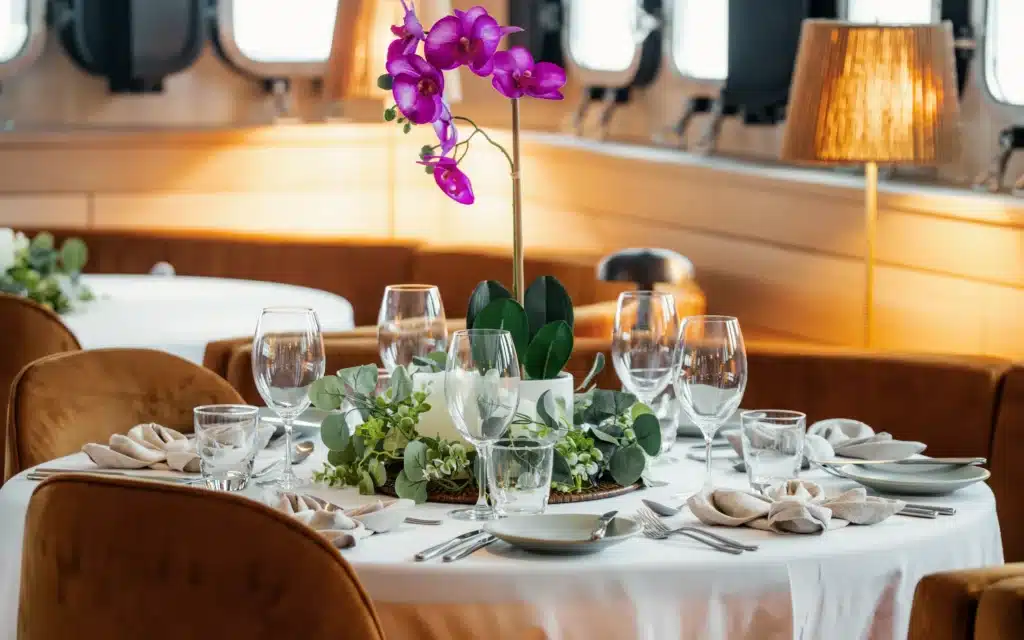
General manager Mick Fogg, who oversees the line’s expedition program, points to guest response as the real measure of the first year. “For us, the measure of success has been how strongly guests have responded to the experience we’ve created,” Fogg said. “From our expert expedition team and destination-inspired dining to the all-inclusive onboard offering and the intimacy of travelling with just 30 guests, every element has been carefully considered to make exploring some of the world’s most remote destinations feel seamless, personal and deeply rewarding. Guided by our philosophy of ‘Small Footprints. Infinite Horizons.’, we’re committed to delivering authentic, respectful experiences that connect guests with extraordinary places, cultures and wildlife, while supporting the communities and environments we visit. The level of repeat interest we are seeing gives us great confidence as we continue to refine the product and enhance the guest experience in our second year.”
Beyond the Kimberley: the 2027 and 2028 horizon
With the Kimberley program established, Pearl Expeditions is widening its map. The 2027 and 2028 seasons push into some of the region’s most biodiverse waters, among them Saleh Bay for whale shark snorkeling, East Indonesia and Raja Ampat for Komodo dragon encounters, the fjords of Tufi in Papua New Guinea by traditional outrigger canoe, and the rivers of Borneo, where klotok boats carry guests upriver to the orangutans of Camp Leakey. It is a deliberate shift from a single signature destination toward a broader portfolio of hard-to-reach places, the kind that reward small ships over large ones.
What the first year settles, and what it does not
None of this makes Pearl Expeditions immune to the pressures facing every boutique operator: a single-vessel fleet leaves little room for error, and replicating a first year built on inaugural-voyage buzz is its own challenge. But the early signals—repeat guests, a disciplined trade strategy, and a level of vertical integration few competitors can match—give the company a clearer runway than most new entrants get.
For Bratton, the milestone is personal as much as strategic. “To say we are proud is an understatement,” she said. “This first year has given us a strong foundation from which to grow, and we are excited about the opportunities ahead as Pearl Expeditions enters its second year of operations.”
For more information visit www.pearlexpeditions.com.
Feature image supplied, credit: Josh Burkinshaw.






About the Author: Jason Kerr